Quick answer: Vinyl siding costs less up front, with published 2026 estimates of about $3 to $8 per square foot installed. James Hardie fiber cement runs about $5 to $13 per square foot, but it is heavier, noncombustible and generally lasts longer. For most Connecticut and New York homeowners the choice comes down to budget, the look you want and, just as important, who installs it.
If you are planning to re-side your home, the first big decision is the material. Vinyl and James Hardie fiber cement are the two options homeowners compare most often, and they behave very differently once they are on a house in a Northeast climate. This guide compares them side by side so you can walk into your estimates knowing what matters.
Vinyl vs. James Hardie siding at a glance
| Factor | Vinyl siding | James Hardie fiber cement |
|---|---|---|
| Installed cost | About $3 to $8 per sq ft | About $5 to $13 per sq ft |
| Typical lifespan | Roughly 20 to 40 years | Roughly 40 to 50 years |
| Fire performance | Can soften, warp or melt under high heat | Noncombustible and Class A fire rated (ASTM E84), according to James Hardie |
| Look | Wide range of colors and profiles | Closer to real wood, cedar shake and stone textures |
| Upkeep | Low. Wash it; no painting | Low to moderate. Inspect caulk and trim; repaint over time depending on the finish |
| Weight and install | Light and quicker to install | Heavy, needs trained installers and the right tools |
Cost and lifespan figures are national industry estimates, not DFS quotes. Guides disagree, so use them to compare the two materials, not to budget to the dollar.
What does each cost?
Fiber cement is usually about 1.5 to 2 times the price of vinyl, mostly because the boards are heavier, take longer to install and require more specialized labor. Here is the typical 2026 range per square foot of wall area, installed:
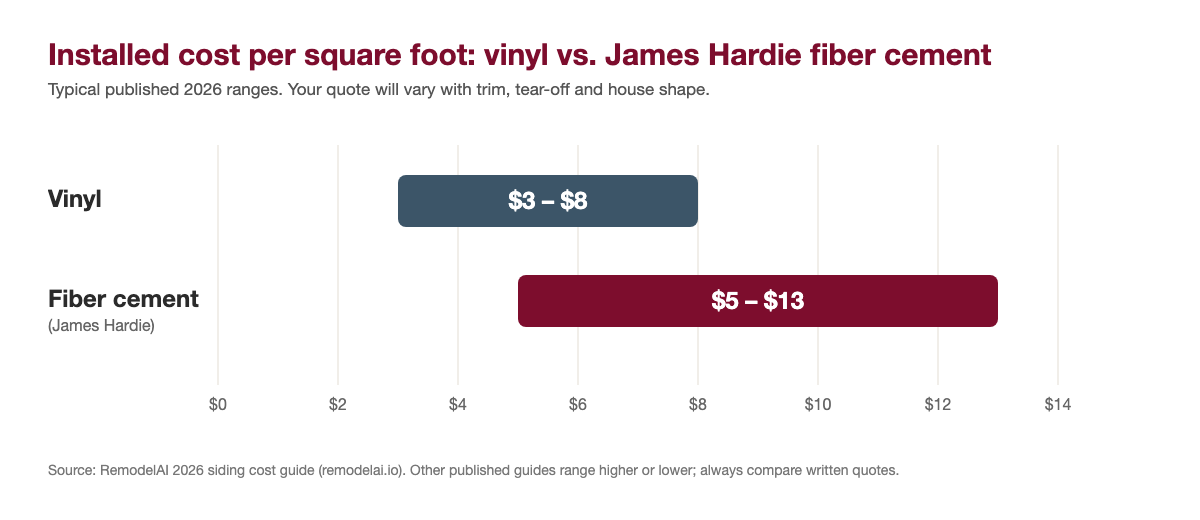
To make that real, picture 1,500 square feet of wall area to be covered. At those ranges, vinyl would land around $4,500 to $12,000 and fiber cement around $7,500 to $19,500. Your own number depends on things the per-foot price hides:
- Tear-off and disposal of the old siding.
- House wrap, flashing and sheathing repairs if water damage is found underneath.
- Trim, corners, soffit and fascia, which add up quickly on homes with many dormers and corners.
- Style and finish, such as straight lap boards versus shingle or panel looks, and factory-finished versus field-painted boards.
- Number of stories and access.
How they hold up in Connecticut and New York weather
Siding in our region deals with freezing winters, nor’easters, wet springs and hot, humid summers. Here is how the two materials respond.
Vinyl siding
- Resists moisture and rot well, and it never needs paint.
- Expands and contracts with temperature swings, so it must be installed with room to move. Siding nailed too tight can buckle.
- Can crack from impact, especially when it is very cold.
- Can warp from intense heat. James Hardie points out that reflected sunlight from Low-E glass windows can distort vinyl, so it is worth asking about if a neighboring house or your own windows reflect onto a wall.
James Hardie fiber cement
- Is a dense, heavy board that is dimensionally stable, so it holds its shape through freeze-thaw cycles.
- Is noncombustible, which matters for homes close to a neighbor, a grill or a fireplace chimney. James Hardie notes the fire rating does not extend to paints or coatings applied on top.
- Holds little appeal for pests, according to James Hardie.
- Still needs good caulking and flashing at trim and joints, because water getting behind any siding is what causes damage.
Note: some of these claims come from the manufacturer, so ask any contractor for samples and warranty documents in writing.
Looks and color options
Vinyl comes in many colors and profiles, and modern vinyl looks better than the siding of 20 years ago. Fiber cement is the stronger choice when you want a convincing wood look. HardiePlank lap siding in the CedarMill finish, for example, comes in colors such as Winter White, Windward Blue, Willow Green and Whispering Pines, and Hardie offers shingle and panel styles for accents on gables and dormers. Colors on vinyl are molded through the material, while fiber cement can be factory finished or painted to match.
Installation matters more than the material
The most common complaints about siding trace back to how it was installed, not what it was made of. Whichever material you choose, ask your contractor about:
- Water management: house wrap, flashing around windows and doors, and sealed penetrations.
- Fastening: correct nail placement and spacing. Vinyl needs room to slide; fiber cement needs blind-nailed or properly spaced fasteners.
- Cutting practices: cutting fiber cement creates fine silica dust, so professional crews use dust-reducing methods and protective equipment.
- Clearances and caulk: correct gaps at the roofline, grade and trim.
Hardie boards are heavy and unforgiving of shortcuts. If you choose fiber cement, choose a crew that installs it regularly.
Which should you choose?
Vinyl is usually the better fit if:
- You want the lowest upfront cost and the lowest maintenance.
- You plan to sell in the next several years and want fresh, clean curb appeal on a budget.
- Your home’s style works well with clean lap or shake profiles.
James Hardie fiber cement is usually the better fit if:
- You want a longer-lasting material and plan to stay in the home.
- You want the look of real wood or cedar shingle without the upkeep.
- Fire resistance matters, for example on a tight lot.
- You are comfortable paying more up front for lower long-term replacement risk.
How to compare siding quotes
Ask every contractor to quote the same job so you can compare like with like:
- The same square footage, product line and color.
- Tear-off, disposal and house wrap included in writing.
- Trim, corners, soffit and fascia itemized.
- Who will do the work: employees or subcontractors, and how often they install this material.
- Product and workmanship warranties, in writing.
- Proof of insurance and any required permits.
- A start date, a realistic timeline and a payment schedule.
Frequently asked questions
Is James Hardie siding worth the extra cost?
Often yes for homeowners who plan to stay and want a longer-lasting, fire-resistant material with a wood-like look. If your priority is the lowest cost, vinyl is a perfectly sound choice when it is installed correctly.
Does James Hardie siding need to be painted?
It depends on the finish. Factory-finished boards are painted at the plant and typically need less frequent repainting than boards painted on site, but every exterior finish eventually needs maintenance. Ask for the manufacturer’s finish warranty details.
Can vinyl siding look like real wood?
Some vinyl profiles imitate cedar shake and wood grain reasonably well from the street, but fiber cement generally reproduces wood texture more convincingly up close.
How long does it take to re-side a house?
It depends on the size of the home, the material and the weather. Your contractor should give you a written schedule before work starts.
Can you put new siding over old siding?
Sometimes, but removing the old siding lets the crew inspect the wall for hidden moisture damage and install proper flashing. Most professionals recommend a full tear-off.
Get a siding estimate from DFS In-Home Services
DFS In-Home Services has been serving homeowners with roofing, siding, windows, seamless gutters and renovations since 2001. We are based in Carmel, NY, and work across Connecticut and the New York tri-state area, including Fairfield, Litchfield and New Haven counties in Connecticut and Putnam and Westchester counties in New York. James Hardie is one of our siding partner brands, and 100% financing is available.
Ready to compare options for your home? Call us at 1 (877) 337-2739, request a free in-home consultation, or see our siding services. If you are also planning new windows, doing both at once can save you a second round of trim and flashing work.
Sources: RemodelAI, How Much Does Siding Cost in 2026; James Hardie, HardiePlank vs. vinyl siding; HomeServe, Hardie board installation costs. Prices are national estimates and will vary by home and contractor.
Ready to Start Your Project?
Get a FREE, no obligation In-Home Service consultation.
Request Estimate
Talk to one of our products specialist about your project.