
In short: A few cracked, loose or faded panels on otherwise sound siding can usually be repaired. Siding replacement makes more sense when damage is spread across several walls, the wall behind the siding is wet or soft, or matching panels are no longer made. A close inspection, including what is under the siding, is the only reliable way to know.
Siding takes the full force of Connecticut weather: freeze and thaw cycles, wind-driven rain, heavy snow and summer sun. Sooner or later every house shows some wear, and the question becomes whether a repair will do or whether siding replacement is the smarter long-term move.
This guide is for homeowners in Litchfield and Fairfield County, from Danbury and New Milford to smaller towns like Sherman, Bridgewater, Roxbury and South Kent. It explains what different kinds of damage usually mean, when a repair makes sense, and when you are better off planning a full replacement.
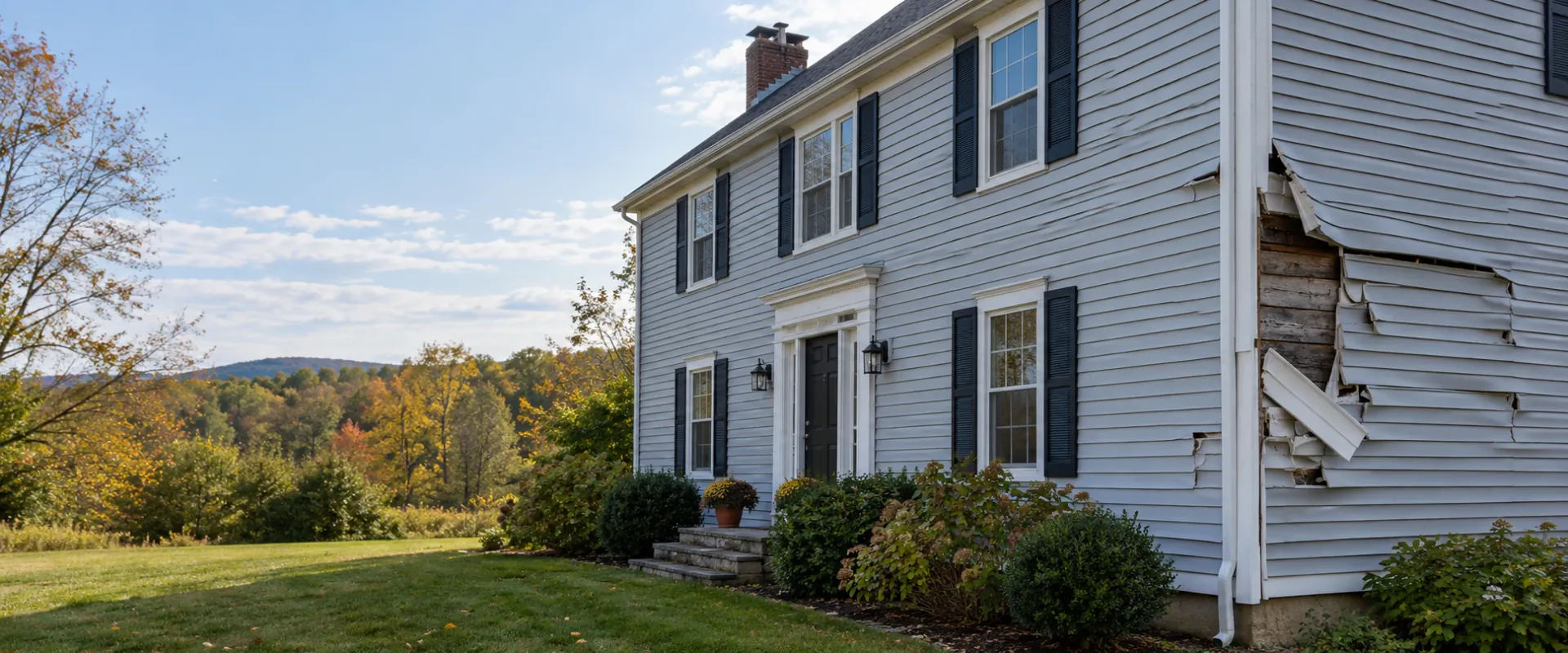
Table of Contents
When a Siding Repair Is Usually Enough
Repairs work best when the problem is small, recent and limited to the siding itself. If the wall behind it is dry and solid, there is often no reason to replace good siding just because a few pieces failed.
A storm damaged a small area. A fallen branch or flying debris that cracked a handful of panels can often be fixed by replacing just those pieces, as long as you can find a close color match.
A few panels came loose. Vinyl panels can unlock in high wind, especially near corners and under eaves. A crew can usually re-hang them, or replace the few that are bent, without disturbing the rest of the wall.
Trim or caulking has failed. Gaps around windows, doors and corner trim let water in, but the fix is often new trim, flashing or sealant rather than new siding on the whole wall.
The damage is cosmetic. Mild fading or a small dent on one side of the house is a looks issue, not a performance issue. You can repair it, live with it, or plan siding replacement on your own schedule.
When Siding Replacement Makes More Sense
Siding replacement is usually the better value when problems are widespread or when the siding is no longer protecting the house underneath. Patching in these situations tends to cost more over time.
Damage shows up on several walls. If cracking, warping or buckling appears all around the house, the siding is likely near the end of its life, and repairs will keep coming.
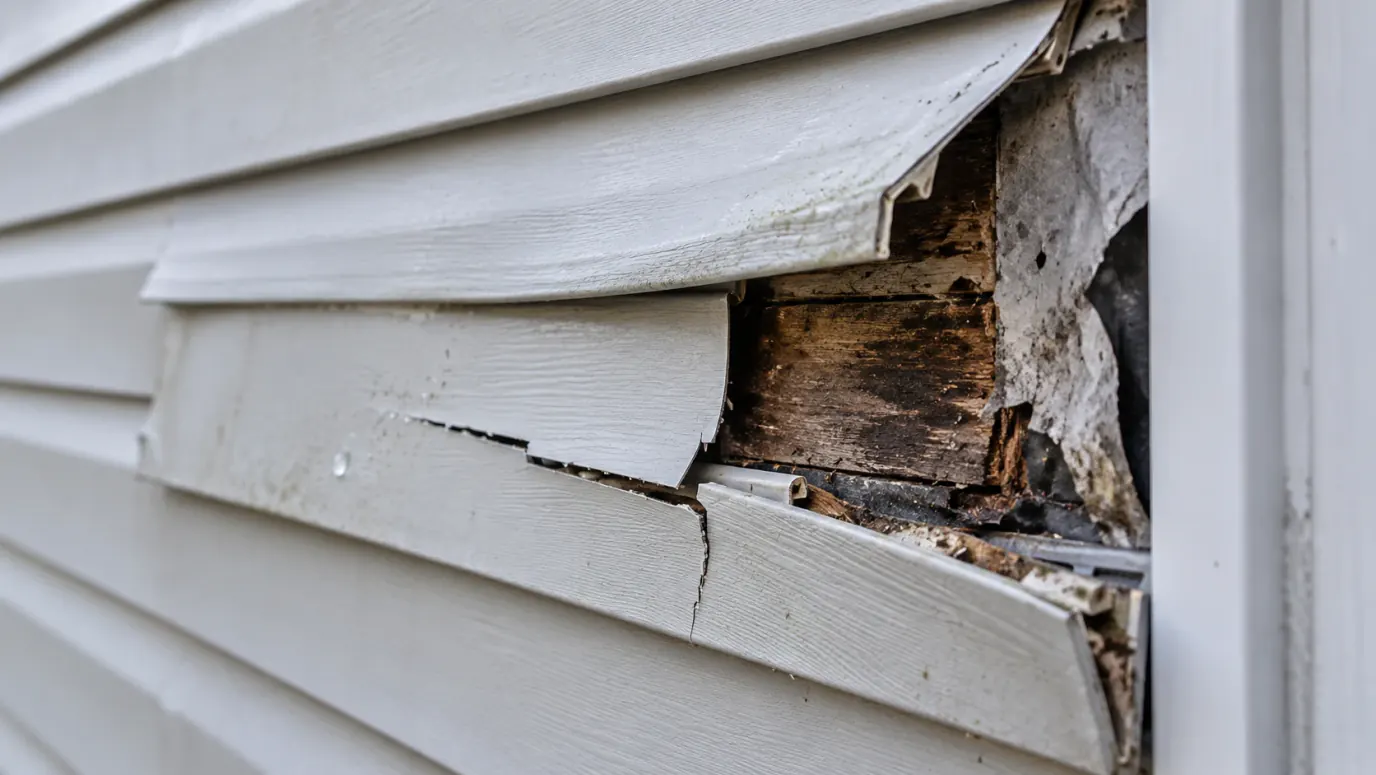
The wall behind the siding is soft or wet. Rotted sheathing, mold or moisture inside the wall cavity is a sign that water has been getting past the siding. That needs the siding removed so the wall can be repaired and properly wrapped.
You see moisture signs indoors. Peeling paint, stained drywall or a musty smell on exterior walls can point to siding that is no longer shedding water.
Matching panels are no longer available. When a color or profile has been discontinued, a repair can stand out. Siding replacement on at least the affected wall is often the cleaner answer.
Your energy bills or drafts have crept up. Old siding over missing or damaged house wrap can let air move through the walls. Siding replacement is a chance to add a proper weather barrier and, if you choose, insulated siding.
What You See and What It Usually Means
Use this table as a starting point. It is general guidance, and a hands-on inspection should always confirm the answer.
| What you see | What it often means | Usually points to |
|---|---|---|
| A few cracked or dented panels | Impact or storm damage in one spot | Repair |
| Loose or unlocked panels after wind | Panels pulled free, nails may have failed | Repair |
| Warping or buckling across a wall | Heat exposure or panels nailed too tight | Repair or partial replacement |
| Heavy fading on every side | Siding has aged out | Siding replacement when convenient |
| Soft spots when you press the wall | Rotted sheathing behind the siding | Siding replacement and wall repair |
| Peeling paint or stains inside on exterior walls | Moisture getting into the wall | Inspection, likely replacement |
Why Older Connecticut Homes Need a Closer Look
Many homes across Litchfield and Fairfield County were sided decades ago, sometimes over older wood clapboard and often without the house wrap and flashing details used today. From the outside, that siding can look fine while moisture quietly works its way in behind it.
Houses in wooded or open rural settings, common around Sherman, Roxbury and Bridgewater, also take more wind and shade. Shaded walls stay damp longer, and exposed walls take the brunt of winter storms. Both are worth checking more carefully before you decide on repair or siding replacement.
How a Contractor Checks Your Siding
A good siding inspection goes beyond a walk around the house. Expect a contractor to look closely at a few key areas.
- Problem walls up close. Checking how panels lock together and whether nails are holding.
- The wall underneath. Pressing for soft spots and, where needed, lifting a panel to see the sheathing and house wrap.
- Windows, doors and corners. The places where water most often gets in.
- Inside the house. Looking for stains, peeling paint or dampness on exterior walls and in the attic.
- Color and profile. Confirming whether matching panels are still available for a repair.
Ask for photos of anything they find behind the siding. If you are weighing materials for a full siding replacement, our guide to vinyl vs James Hardie siding in Connecticut compares cost, durability and upkeep. For general product and installation information, the Polymeric Exterior Products Association, formerly the Vinyl Siding Institute, is a helpful industry resource.
Partial or Whole-House Siding Replacement?
You do not always have to re-side the entire house. Replacing one or two damaged walls can make sense when the rest of the siding is sound and a good color match is available, for example on the side of the house that takes the most weather.
Whole-house siding replacement tends to win when the siding is older, faded unevenly or discontinued, or when you want a new color or material. It also gives you one consistent look and one warranty for the whole exterior. Many homeowners plan it alongside new windows or gutters so the trim and flashing all tie together.
What a Siding Replacement Project Involves
Knowing the steps helps you compare quotes and spot shortcuts. A typical project starts with removing the old siding so the crew can see the wall. Any soft or rotted sheathing is repaired, and a weather-resistant barrier, often called house wrap, goes on before anything else.
Next comes flashing around windows, doors and other openings, which is where many leaks begin. Only then are the new panels, corners and trim installed, with room for vinyl to expand and contract through our hot summers and cold winters. A final walkthrough and cleanup should finish the job, including a sweep for nails in the yard and driveway.
If your roof is also getting older, it can be worth having it checked at the same time. Our roof inspection checklist shows what a good inspection covers.
Frequently Asked Questions
1. Can you replace just a few pieces of siding?
Often, yes. Individual vinyl panels can usually be removed and replaced, provided a close color and profile match is still available.
2. How do I know if siding replacement is worth it?
It is usually worth it when damage is widespread, the wall behind the siding is wet or soft, or repairs keep coming back. A contractor’s inspection, with photos, should make the answer clear.
3. Is it better to replace siding all at once?
When most of the siding is aging, doing it all at once usually gives a better match and fewer future repairs. If only one wall is damaged, a partial replacement can be enough.
4. What time of year is best for siding replacement in Connecticut?
Spring through fall is the most common season, but siding replacement can be done in many winter conditions. Ask your contractor how cold weather affects their installation.
Get an Honest Siding Inspection
If you are not sure whether your siding needs a repair or a full replacement, a close inspection gives you the facts before you spend anything. Learn more about our siding services and our vinyl siding work in Connecticut.
DFS In-Home Services has served homeowners with roofing, siding, windows, seamless gutters and renovations since 2001. We are based in Carmel, NY, and work across Connecticut and the New York tri-state area, including Fairfield, Litchfield and New Haven counties in Connecticut and Putnam and Westchester counties in New York. 100% financing is available.
Call us at 1 (877) 337-2739 or request a free in-home estimate.
Ready to Start Your Project?
Get a FREE, no obligation In-Home Service consultation.
Request Estimate
Talk to one of our products specialist about your project.