In short: Shortlist a few local siding contractors, confirm their license or registration and insurance, look at recent jobs near you, and insist on an in-home inspection. Then compare written quotes line by line, not just by the total, and read the warranty before you sign.
New siding can last for decades, so the company you hire matters as much as the material you pick. The trouble is that most siding contractors sound the same on the phone. The differences show up in the details: how they inspect your walls, what their quote actually includes, and how they stand behind the work.
This guide walks through how to choose siding contractors step by step, whether you live in Syracuse, Binghamton or Albany, in Yonkers or Armonk in Westchester, or in Danbury, Sherman or Roxbury in Connecticut. You will also find a simple way to compare quotes and the red flags to watch for.

Table of Contents
What Good Siding Contractors Do Differently
Good siding contractors look behind the siding, not just at it. They check for soft sheathing, missing house wrap and water damage around windows before they quote, because those problems change the job. They explain the weather barrier, flashing and trim as clearly as they explain colors.
They also put everything in writing. A clear, detailed scope protects you and them, and it makes it easy to compare one company with another.
How to Choose Siding Contractors, Step by Step
Step 1. Build a Short List of Local Siding Contractors
Start with three or four companies that work in your area. Ask neighbors who have re-sided recently, look at recent local reviews, and check that each company actually does siding regularly rather than as an occasional add-on.
Step 2. Check License, Registration and Insurance
Ask for proof of liability insurance and workers’ compensation, and check the license or registration that applies where you live. The rules differ between Connecticut, New York City and individual New York counties, so see the licensing section below.
Step 3. Look at Recent Work Near You
Ask for addresses or photos of jobs finished in the last year or two, ideally on homes like yours. Drive by if you can. Straight lines, tight corners and neat trim around windows say a lot about a crew. It is also fair to ask whether the same crew that did those jobs will work on your house, and who will supervise them day to day.
Step 4. Insist on an In-Home Inspection
Reliable siding contractors will not quote a whole house from a photo. Expect someone to walk every wall, look at problem areas closely and, where needed, lift a panel to see the sheathing. If you are unsure whether you even need full replacement, our guide to siding repair or replacement helps you prepare for that visit.
Step 5. Get a Detailed Written Quote
A good quote names the siding brand, product line, profile and color, and lists removal and disposal of old siding, sheathing repairs, house wrap, flashing, trim, soffit and fascia work, cleanup, permits and warranties. If you are still choosing a material, our comparison of vinyl and James Hardie siding explains the trade-offs.
Step 6. Compare Quotes Line by Line
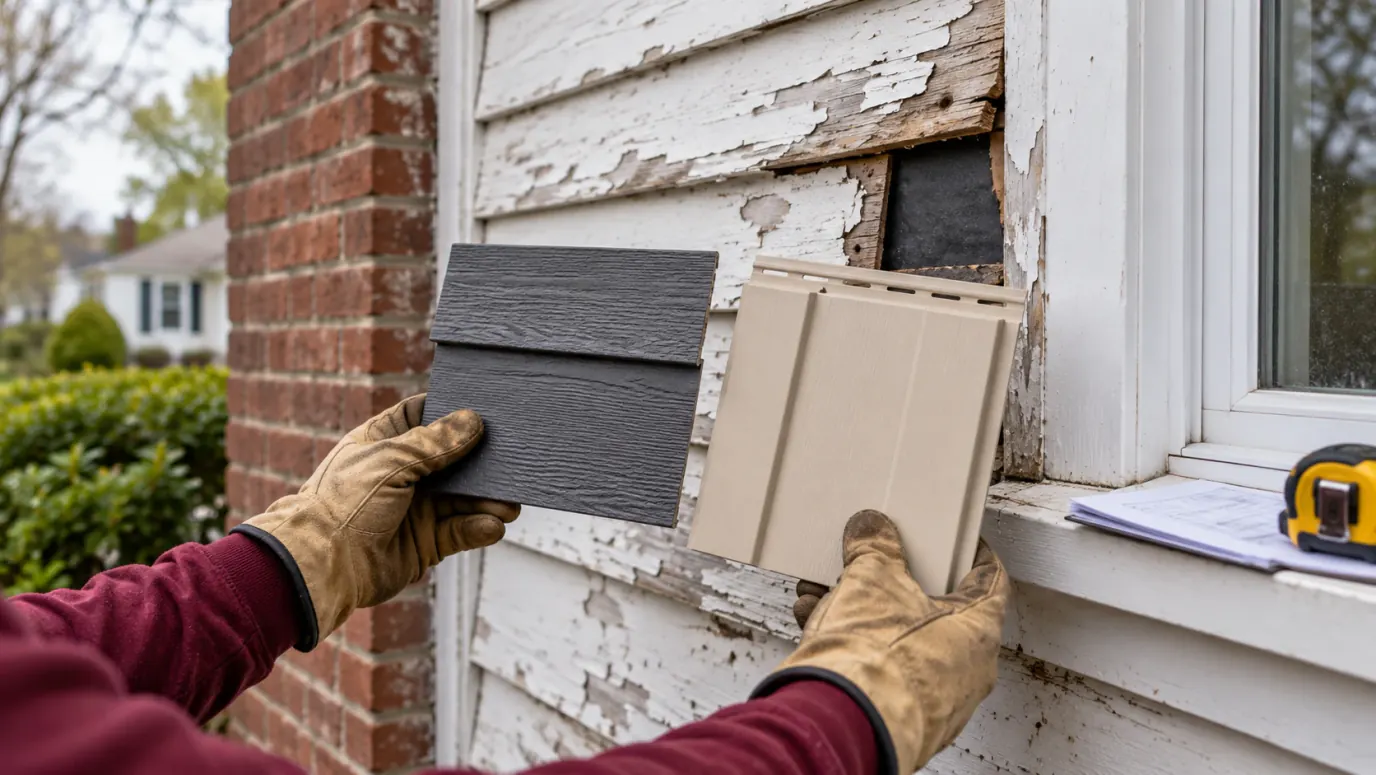
The lowest total is not always the best value. Lay the quotes side by side and check what each one includes. Many price gaps between siding contractors come from items one company leaves out.
Step 7. Read the Contract and Warranty
Before you sign, confirm the start date and schedule, the payment terms, what happens if they find hidden damage, and who you call with a problem later. Make sure both the product warranty and the workmanship warranty are in writing. Keep a copy of the signed contract, product details and color names, so future repairs can match.
How to Prepare for the Estimate Visit
A little preparation helps you get more out of each estimate and makes the quotes easier to compare.
- Walk around the house first and note any loose, cracked or faded panels, plus spots where you have seen leaks or stains inside.
- Gather what you know about the house: its age, when the current siding went on and any past repairs.
- Decide whether you want to change the color, profile or material, or match what you have.
- Think about related work, such as new windows, gutters or trim, that could be done at the same time.
- Write down your questions so each company answers the same ones.
Ask every contractor to walk the same areas with you. That way you can see who takes the time to look closely and who rushes.
What to Watch For Once Work Starts
Even after you choose a company, it helps to know what good work looks like. Old siding should come off cleanly, and any soft sheathing should be shown to you before it is covered. House wrap should be lapped so water runs down and out, and windows and doors should get proper flashing before trim goes on.
Vinyl panels should hang loosely enough on their nails to expand and contract with the seasons, not be nailed tight. At the end, expect a full cleanup and a walkthrough where you can point out anything that needs attention.
Comparing Three Siding Quotes
Here is a simple way to compare siding contractors on paper. Fill in a table like this for your own quotes.
| What to check | Quote A | Quote B | Quote C |
|---|---|---|---|
| Brand, product line and color named | Yes | Yes | Color only |
| Old siding removed and hauled away | Yes | Yes | Not listed |
| Sheathing repairs and how they are priced | Per sheet, listed | Not listed | Not listed |
| House wrap and window flashing | Yes | Wrap only | Not listed |
| Trim, soffit and fascia | Yes | Yes | Extra |
| Permit and cleanup | Yes | Yes | Cleanup only |
| Workmanship warranty in writing | Yes | Verbal | Not listed |
In this example, Quote C may look cheapest, but it leaves out key work that would likely come back as change orders or problems later.
Red Flags When Hiring Siding Contractors
- Pressure to sign the same day for a special price.
- A quote that lists only a total, with no product or scope details.
- No proof of insurance or the license or registration your area requires.
- Plans to install new siding over damaged or wet walls without inspecting them.
- A large cash deposit with no written contract.
- No local references or recent work they can show you.
- On a home built before 1978, no mention of lead-safe work when old painted siding or trim will be disturbed.
The EPA explains the lead-safe rules for older homes on its Renovation, Repair and Painting program page.
Licensing Rules by Area
Connecticut. Home improvement contractors register with the state Department of Consumer Protection. Homeowners in Danbury, Sherman, Roxbury and other towns can ask for the registration number and check it.
New York City. Home improvement contractors working in the Bronx, Brooklyn and the other boroughs are licensed by the city, so ask for the city license number.
New York counties. Some counties, including Westchester, license home improvement contractors, while others do not. In Syracuse, Binghamton and other upstate areas, ask what local registration or permits apply, and lean more heavily on insurance, references and written contracts.
Whatever the rules where you live, good siding contractors will show you their paperwork without hesitation.
Frequently Asked Questions
1. How many quotes should I get from siding contractors?
Three is a good number. It gives you a clear sense of the normal scope and price range without making the decision overwhelming.
2. Should I always choose the lowest siding quote?
Not automatically. Compare what each quote includes first. A lower total often means house wrap, flashing, trim or repairs were left out.
3. What warranty should a siding contractor offer?
Look for a manufacturer warranty on the product and a separate written workmanship warranty from the installer. Ask how long each lasts and what they cover.
4. When is the best time to hire siding contractors?
Many homeowners plan in late winter or early spring to book work for the warmer months, when schedules fill quickly. Some siding can also be installed in cooler weather, so ask about timing.
Talk to DFS About Your Siding
If you are comparing siding contractors, we are happy to inspect your home and give you a clear, written scope you can hold up against any other quote. Learn more about our siding services, our vinyl siding work in Connecticut and our siding services in New York.
DFS In-Home Services has served homeowners with roofing, siding, windows, seamless gutters and renovations since 2001. We are based in Carmel, NY, and work across Connecticut and the New York tri-state area, including Fairfield, Litchfield and New Haven counties in Connecticut and Putnam and Westchester counties in New York. 100% financing is available.
Call us at 1 (877) 337-2739 or request a free in-home estimate.
Ready to Start Your Project?
Get a FREE, no obligation In-Home Service consultation.
Request Estimate
Talk to one of our products specialist about your project.