The short answer: Triple pane replacement windows usually make the most sense in cold, exposed or noisy spots and in homes you plan to keep for a long time. Double pane windows with a good low-E coating are still the right choice for many homes, especially where budget, window weight or older frames are a concern. The installation matters as much as the glass.
If you are shopping for replacement windows in a cold-winter town, one question comes up fast: double pane or triple pane? Homeowners from Rochester, Syracuse, Albany and Schenectady to Hudson, Newburgh, Yonkers and Brooklyn ask us the same thing, and the honest answer is that it depends on the house, the room and how long you plan to stay.
This guide compares the two side by side, explains where triple pane earns its keep, and shows when double pane replacement windows are the smarter buy. You will also find the questions to ask so you can compare quotes with confidence.
Table of Contents
What Is Actually Different Between Double and Triple Pane
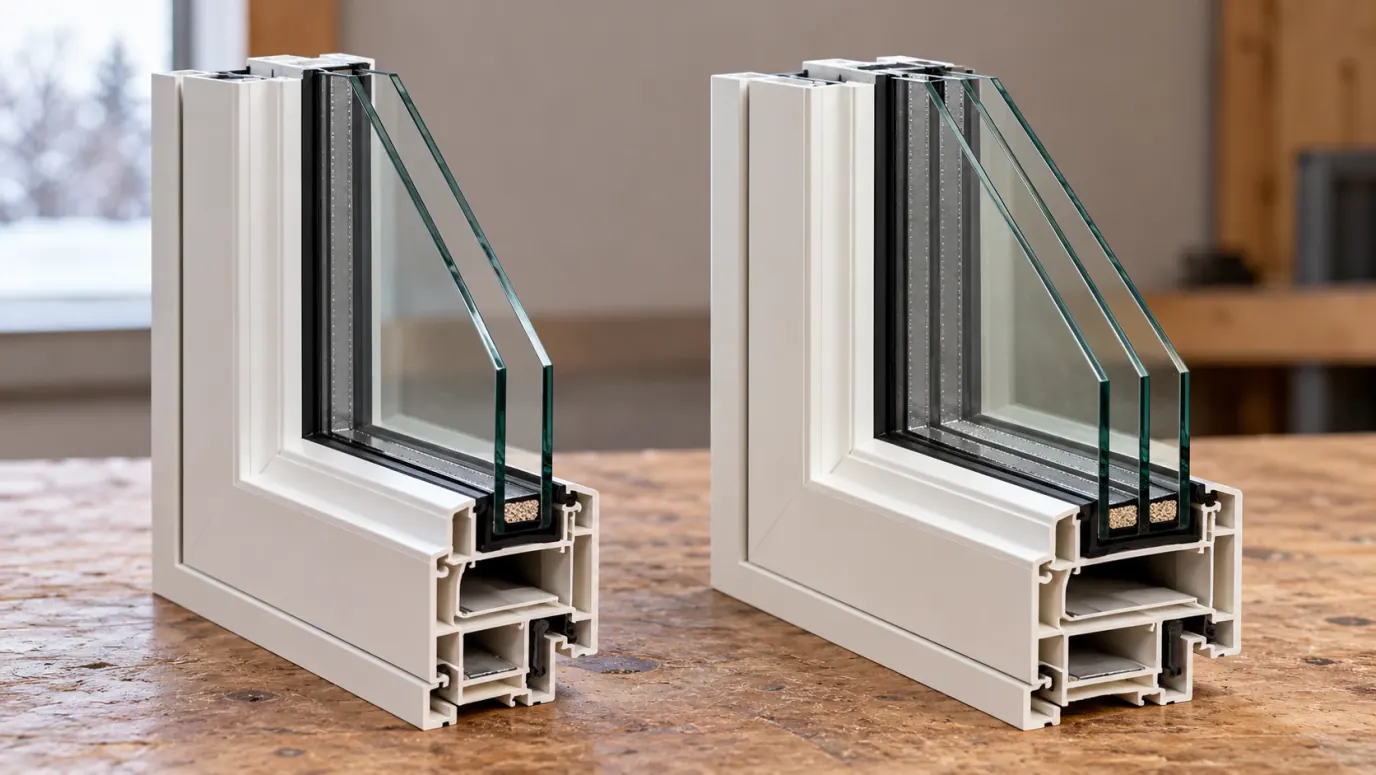
A double pane window has two layers of glass with one sealed space between them. A triple pane window adds a third layer and a second sealed space. Those spaces are usually filled with an insulating gas such as argon, and some triple pane units use krypton, which works well in narrower gaps.
Both types can have a low-E coating, a thin, nearly invisible layer that reflects heat back toward its source. The extra pane and extra gas layer slow heat loss further, which is why triple pane replacement windows generally post better insulating numbers on their labels.
Look at the spacer, too. This is the strip that separates the panes around the edge of the glass. Warm-edge spacers lose less heat than older metal ones, and they help keep the bottom edge of the glass from fogging on very cold mornings, whichever pane count you choose.
The trade-offs are weight, thickness and price. A third pane makes the sash heavier and thicker, and it usually adds to the cost of each window.
Double vs Triple Pane Replacement Windows at a Glance
| Factor | Double pane | Triple pane |
|---|---|---|
| Insulation | Good, especially with low-E and argon | Better, with lower heat loss |
| Cold-glass feel and condensation | Inside glass can get cold on the coldest days | Inside glass stays warmer, so condensation is less likely |
| Outside noise | Reduces noise | Often quieter, though laminated glass can matter more |
| Weight | Lighter, easier on older frames | Noticeably heavier sashes |
| Cost | Lower | Higher per window |
| Best fit | Most rooms, tighter budgets, milder exposures | Cold, windy or noisy sides of the house, long-term homes |
When Triple Pane Replacement Windows Earn Their Keep
You live where winters are long and hard. In towns like Rochester, Syracuse and Schenectady, windows face long stretches of deep cold and wind. That is where the extra insulation of triple pane replacement windows is most noticeable.
Rooms feel drafty or cold near the glass. If you avoid sitting by a big window in January, a warmer inside pane can make the room usable again.
Condensation keeps forming on the inside. Warmer interior glass is less likely to fog or frost, which also protects sills and trim from water damage.
The house faces a busy road or flight path. Triple pane often helps with noise. If quiet is the main goal, ask about laminated glass too, which can make a bigger difference.
You plan to stay for many years. The higher upfront cost has more time to pay back in comfort and energy savings.
When Double Pane Is the Smarter Choice
Budget is the priority. A quality double pane window with low-E glass and argon gas is a big upgrade over old single pane or failed units, and it lets you replace more windows for the same money.
The frames or sashes are older or lighter. Heavier triple pane sashes put more load on balances and hardware. In some older homes, especially with insert installations, double pane replacement windows are the more practical fit.
The window faces south and you like winter sun. Some glass packages let in more of the sun’s warmth than others. Your installer can help you pick a coating that suits each side of the house.
You may move in a few years. You may not stay long enough to recover the extra cost of triple pane.
Choosing Replacement Windows by Region
Upstate New York. In Rochester, Syracuse, Albany and Schenectady, long, deep cold and lake-effect wind put windows to the test. This is where triple pane replacement windows most often make sense, at least on north and west walls and in bedrooms and living rooms where people sit near the glass.
The Hudson Valley. Homes in Hudson, Newburgh and Poughkeepsie see cold winters but also many older houses with original frames. Here the decision often comes down to the condition of the openings. A strong double pane window with a full-frame installation can outperform a triple pane unit squeezed into a tired frame.
Westchester and New York City. In Yonkers, Brooklyn and Staten Island, street noise is often as big a concern as cold. Ask about laminated glass alongside triple pane, and check any building, co-op or landmark rules before you choose a style. In many of these homes, a mix of double and triple pane replacement windows gives the best balance of comfort and cost.
What Matters as Much as the Glass
The best glass in the world will not perform if air leaks around the frame. A careful installation, with proper insulation, flashing and sealing, often makes as much difference to comfort as the choice between two and three panes. Our guide to questions to ask window installers covers what good installation looks like.
Frame material, the low-E coating, the gas fill and the spacer between panes all affect performance too. If you are also comparing vinyl, fiberglass and wood, or insert versus full-frame installs, our window replacement cost guide walks through those choices.
How to Read the Window Label
Most replacement windows carry a label from the National Fenestration Rating Council. Two numbers matter most for cold climates:
- U-factor: how well the window keeps heat in. Lower is better.
- Solar heat gain coefficient (SHGC): how much of the sun’s heat comes through. Higher can help on south-facing windows in winter.
Compare these numbers between the double and triple pane options in your quote. If the difference is small for a particular window, the extra cost of triple pane may not be worth it in that spot.
Questions to Ask Before You Choose
- What are the U-factor and SHGC for each option you are quoting?
- Which gas fill and low-E coating are included?
- Will my existing frames and openings handle the weight of triple pane sashes?
- Is this an insert or full-frame installation, and how will you seal it?
- Can I mix triple pane on cold or noisy sides with double pane elsewhere?
- What warranty covers the glass seal, and what covers the installation?
Frequently Asked Questions
1. Are triple pane replacement windows worth it?
Often in cold, windy or noisy locations and in homes you plan to keep. In milder spots or on a tight budget, a good double pane window is usually the better value.
2. Can I mix double and triple pane windows in one house?
Yes. Many homeowners put triple pane on the coldest or noisiest sides and double pane elsewhere, as long as the styles match from the outside.
3. Do triple pane windows stop condensation?
They reduce it by keeping the inside glass warmer, but high indoor humidity can still cause some. Good ventilation helps too.
4. How long do replacement windows last?
Quality replacement windows commonly last for decades with basic care. The glass seal, hardware and installation quality all affect how long they perform well.
5. Do replacement windows need to be replaced all at once?
No. Many homeowners start with the coldest or most worn windows and replace the rest over time. Choose a style and color you can match later.
Talk to Our Window Team
DFS In-Home Services is a certified Andersen contractor, and our own factory-trained installers can help you compare double and triple pane options for each room in your home. Learn more about our window replacement services and our window repair service in New York.
DFS In-Home Services has served homeowners with roofing, siding, windows, seamless gutters and renovations since 2001. We are based in Carmel, NY, and work across Connecticut and the New York tri-state area, including Fairfield, Litchfield and New Haven counties in Connecticut and Putnam and Westchester counties in New York. 100% financing is available.
Call us at 1 (877) 337-2739 or request a free in-home estimate.
Ready to Start Your Project?
Get a FREE, no obligation In-Home Service consultation.
Request Estimate
Talk to one of our products specialist about your project.