Quick answer: Published 2026 guides put the installed cost of a replacement window at roughly $350 to $1,600 for vinyl and as much as $2,200 or more for fiberglass and wood, depending on size, glass and how the window is installed. For a typical home that can mean a few thousand dollars for a handful of windows or well into five figures for a whole-house project. Treat these numbers as a starting point and get itemized written quotes.
Replacing windows is one of the most visible upgrades you can make, and one of the hardest to price from your couch. Two online guides can differ by a factor of two for the same window. This guide explains what actually drives window replacement cost for homes in New York and Connecticut, shows the published price ranges side by side, and gives you a checklist for comparing quotes.
Window replacement cost by frame material
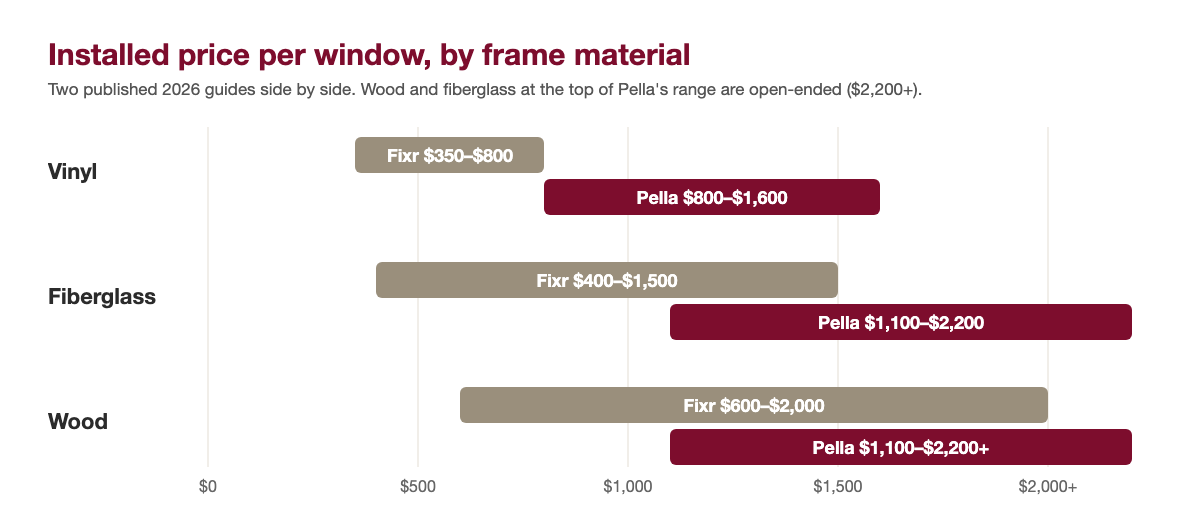
Frame material is the biggest single factor in price. These are the installed per-window ranges published by two national sources in 2026:
| Frame material | Lower estimate (installed) | Higher estimate (installed) | Good to know |
|---|---|---|---|
| Vinyl | $350 – $800 | $800 – $1,600 | Most affordable for standard sizes; resists moisture; low maintenance |
| Fiberglass | $400 – $1,500 | $1,100 – $2,200 | Strong and stable in temperature extremes |
| Wood | $600 – $2,000 | $1,100 – $2,200+ | Classic look; needs more long-term upkeep |
Why do the two guides differ? They use different assumptions about window size, glass package and whether the job is a simple insert or a full-frame replacement. Local figures vary too. One New York City cost guide, for example, shows about $377 to $1,170 per window, and a Connecticut homeowner guide puts a typical whole-home project at roughly $3,000 to $10,000. None of these is a quote for your house, which is why the details below matter.
What drives the price of window replacement
- Frame material. Vinyl is usually the least expensive; fiberglass and wood cost more.
- Window style. A standard double-hung costs less than a bay, bow, casement or picture window. Specialty windows, such as arched units, cost more, and reshaping an opening to fit one can add a few hundred dollars.
- Size. Larger windows need more material and are heavier to install.
- Glass package. Double or triple pane, Low-E coatings and gas fills improve energy performance and raise the price.
- Installation method. Insert (pocket) replacements slide into the existing frame and cost less. Full-frame replacement removes the old frame and trim, lets the crew fix rot and flash the opening properly, and costs more.
- Number of windows. Installers often offer a lower per-window price when more windows are done in one visit.
- Condition and age of your home. Rotted sills, damaged framing and out-of-square openings add repair work.
- Lead-safe work. If your home was built before 1978, EPA rules require contractors who disturb painted surfaces to be lead-safe certified and follow lead-safe practices, which can add to the job.
- Permits and trim. Some towns require permits, and interior and exterior trim work is often priced separately.
Budget examples
These are illustrations only, using the published vinyl range of about $350 to $1,600 per installed window:
- 5 windows: roughly $1,750 to $8,000.
- 10 windows: roughly $3,500 to $16,000.
- 20 windows: roughly $7,000 to $32,000.
The spread is wide because window size, glass and installation method vary so much. A written, itemized estimate for your home will narrow it down in a single visit.
Insert replacement vs. full-frame replacement
Insert replacement keeps your existing frame and trim and fits a new window inside it. It is faster, less disruptive and less expensive, and it works well when the frames are square and free of rot.
Full-frame replacement takes everything out down to the rough opening. It costs more, but it is the right choice when there is water damage, when frames are out of square or when you want to change the size of the opening or install new flashing and insulation around the window.
Signs it is time to replace your windows
- Drafts or cold spots near the windows.
- Fog or condensation between the panes, which means the seal has failed.
- Windows that are hard to open, stick or will not stay up.
- Soft, rotted or warped wood, or cracked vinyl.
- Outside noise coming through more than it should.
- Energy bills that seem high for your home’s size.
Energy efficiency, rebates and tax credits
When you compare windows, look for the ENERGY STAR label for your climate zone and the NFRC label, which lists the U-factor (how well the window keeps heat in; lower is better) and the solar heat gain coefficient. Upgraded glass raises the price but can reduce drafts and improve comfort in our cold winters.
One thing has changed: the federal energy-efficient home improvement tax credit that used to cover windows is reported to have ended for windows placed in service after December 31, 2025. Check with a tax professional, and ask your utility about any current rebates before you buy.
How to compare window quotes
- Make sure each quote lists the brand, product line, frame material and glass package for every window.
- Confirm whether it is an insert or full-frame installation.
- Ask what is included: removal and disposal of old windows, trim, caulking, flashing, permits and cleanup.
- Ask about lead-safe practices if your home predates 1978.
- Get the product warranty and the installation warranty in writing, and ask who honors each.
- Check that the contractor is licensed and insured as required where you live.
- Ask for references and photos of recent installs.
Frequently asked questions
Is it cheaper to replace all the windows at once?
Often, yes. Many installers reduce the per-window price on multi-window jobs, and one crew visit covers everything. It also avoids mismatched windows on the same house.
Do replacement windows pay for themselves in energy savings?
Rarely on energy savings alone. How much you save depends on the condition of your current windows. Most homeowners also count comfort, less noise, easier operation and curb appeal as part of the return.
Can I replace only a few windows?
Yes. Replacing the worst offenders, such as leaky or fogged windows, is a common way to spread out the cost. Just choose a style and color you can match later.
What is the difference between vinyl and fiberglass windows?
Vinyl is the most affordable and low-maintenance. Fiberglass costs more, is very stable in temperature swings and can often be painted. Wood offers a classic look but needs more upkeep.
Get a window quote from DFS In-Home Services
DFS In-Home Services has provided roofing, siding, windows, seamless gutters and renovations since 2001. We are a certified Andersen windows and doors contractor, and we serve homeowners across Connecticut and the New York tri-state area, including Putnam and Westchester counties in New York and Fairfield, Litchfield and New Haven counties in Connecticut. Based in Carmel, NY, we offer a free in-home consultation, and 100% financing is available.
Ready for a number that fits your home? Call 1 (877) 337-2739, request a free in-home consultation, or see our window replacement services. Planning new exterior work too? Learn how new siding pairs with new windows.
Prices are national and regional estimates from published 2026 cost guides and will vary by home and contractor. For a quote that fits your home, contact DFS In-Home Services, a certified Andersen windows and doors contractor.
Ready to Start Your Project?
Get a FREE, no obligation In-Home Service consultation.
Request Estimate
Talk to one of our products specialist about your project.