Quick answer: To file a roof damage insurance claim after a Connecticut storm, make the home safe, stop more water getting in, photograph everything and report the claim quickly. Then have a licensed roofer inspect and document the damage before the adjuster visits, keep every receipt, and do not sign for full repairs until the claim scope is clear.
A roof damage insurance claim is often the last thing on your mind when a nor’easter tears shingles off your house or a fallen limb punches through the roof. Yet the first few days after a storm shape how smoothly that claim goes. This guide is for Connecticut and New York homeowners who want a clear, step-by-step plan, from the first 48 hours to the final repair. You will learn what to document, what to ask your insurer and which mistakes commonly slow claims down.
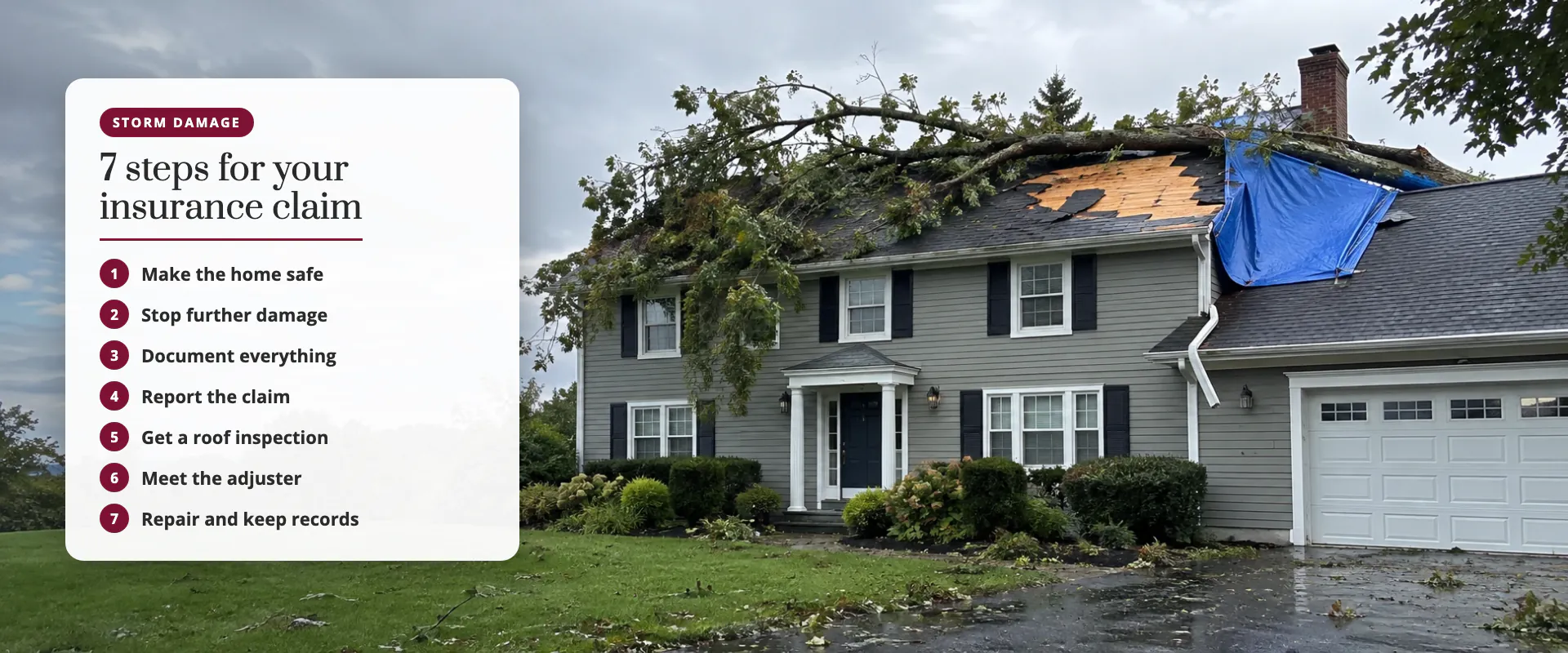
Table of Contents
Why the First Days Matter for a Roof Damage Insurance Claim
Storm damage rarely stays the same size. A lifted shingle lets wind-driven rain reach the roof decking, and wet decking can lead to rot, stained ceilings and mold in the attic. Many homeowners policies expect you to take reasonable steps to prevent further damage, so waiting can make part of the loss harder to claim.
Timing also matters on paper. Many policies set a window for reporting damage, and adjusters are busiest right after a big storm. Filing early, with good records, usually puts you in a stronger position than calling weeks later about a leak that has spread through the ceiling.
7 Steps for a Roof Damage Insurance Claim in Connecticut
Follow these steps in order. Each one builds the record your insurer will look for, and each one protects your home while the claim moves forward.
1. Make the Home Safe First
Before you think about paperwork, check for hazards. Stay out of rooms with sagging ceilings, keep away from downed wires and never climb onto a wet or icy roof. If water is near light fixtures or outlets, turn off power to that area at the panel if it is safe to do so. No roof damage insurance claim is worth an injury.
2. Stop Further Damage With Temporary Repairs
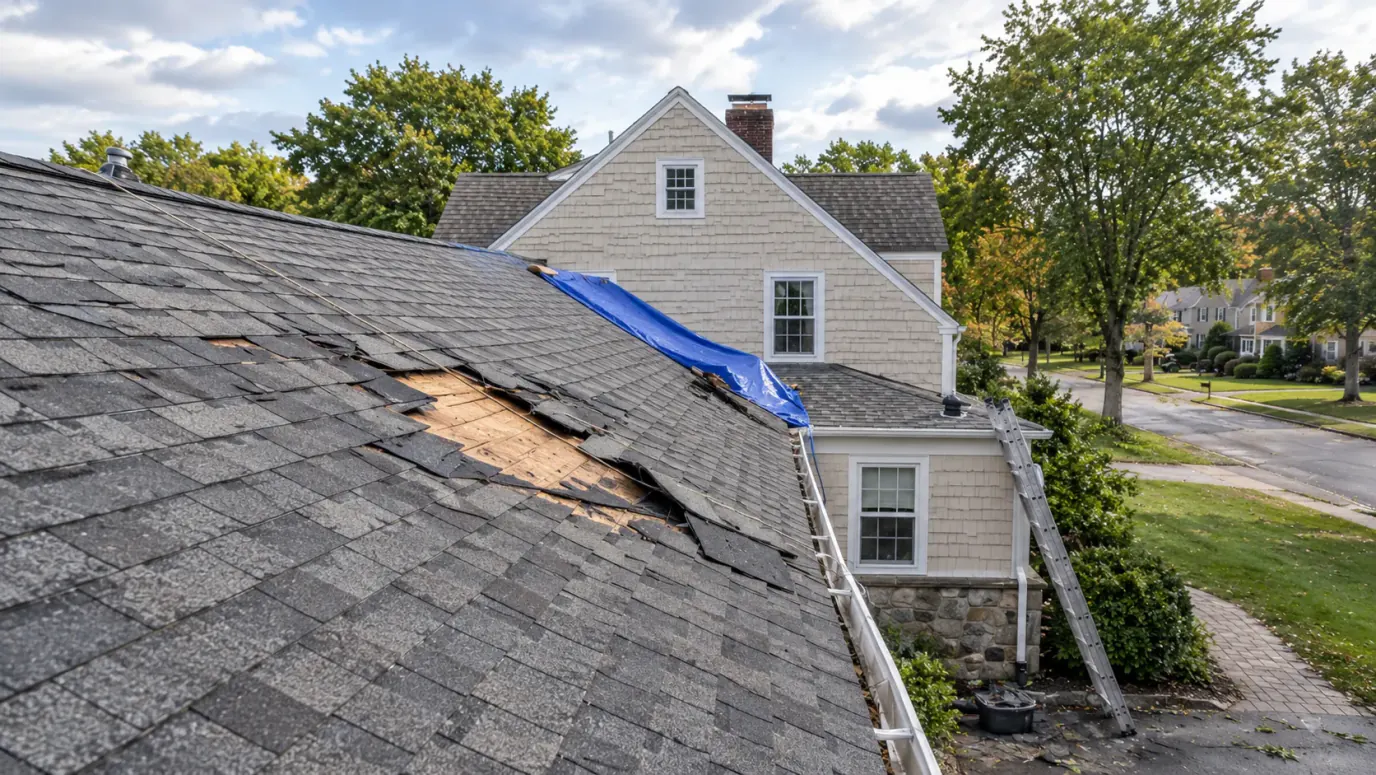
Cover open areas with a tarp, move furniture away from leaks and catch dripping water in buckets. If the damage is large, a roofer can install a proper temporary cover. Keep receipts for tarps, fasteners and emergency labor, since many policies reimburse reasonable emergency costs as part of a roof damage insurance claim.
3. Document Everything Before Cleanup
Strong photos are the backbone of any roof damage insurance claim. Take wide and close-up photos and video of the roof, gutters, siding, windows, attic and interior stains. Photograph fallen limbs and debris where they landed before anyone moves them.
Write down the date and time of the storm, and save local weather reports or news coverage that mention it. If neighbors had damage from the same storm, note that too.
4. Read Your Policy and Report the Claim
Look at your declarations page for your deductible, and check whether your policy pays replacement cost or actual cash value for the roof. Some policies treat wind or hail differently, so read that section closely. Then report the roof damage insurance claim through your insurer’s app, website or phone line, and write down your claim number.
5. Get an Independent Roof Inspection
Before the adjuster arrives, ask a licensed roofing contractor to inspect the roof and write up what they find. A good report lists the damaged areas, includes photos and explains the repair or replacement the roofer recommends. Our guide to what a good roof inspection checks shows what to expect. Having this in hand strengthens your roof damage insurance claim, because you can compare it with the adjuster’s findings instead of relying on one opinion.
6. Meet the Adjuster and Compare Scopes
Try to be home when the adjuster inspects, and ask whether your roofer can attend too. Point out every area of damage, including gutters, flashing, skylights and interior ceilings. When the estimate arrives, compare it line by line with your roofer’s scope and ask about anything that is missing.
7. Approve Repairs and Keep the Paper Trail
Once the claim is approved, schedule permanent repairs with a contractor you trust. Keep copies of the estimate, contract, invoices, photos of the finished work and every email with your insurer. If your insurer holds back part of the payment until the work is complete, this record helps you close out your roof damage insurance claim and collect the balance.
Roof Damage Insurance Claim at a Glance
Use this table as a quick checklist for each stage of a roof damage insurance claim.
| Stage | What to do | What to keep |
|---|---|---|
| First 24 hours | Make the home safe, tarp openings, move belongings away from leaks | Photos, receipts for tarps and emergency work |
| First 48 hours | Document all damage, read your policy, report the claim | Claim number, weather reports, policy pages |
| First 1 to 2 weeks | Roofer inspection, adjuster visit | Roofer report, adjuster estimate, notes from each visit |
| Approval and repair | Compare scopes, sign the contract, complete the work | Contract, invoices, final photos, insurer emails |
Common Mistakes That Slow a Roof Damage Insurance Claim
- Waiting to report. Small leaks spread, and late reports can raise questions about when the damage happened.
- Cleaning up before photos. Once debris is gone, it is harder to show what the storm actually did.
- Skipping temporary repairs. Damage that grows because nothing was covered may not be fully paid.
- Signing paperwork too quickly. Read any contractor agreement carefully, and ask exactly what it allows the contractor to do on your behalf.
- Accepting the first estimate without review. Early estimates often miss flashing, gutters, ventilation or interior repairs.
How to Choose a Roofer After a Storm
After a major storm, out-of-town crews often go door to door across Fairfield and Litchfield counties. Some are reputable, and some disappear once the deposit clears. Look for a contractor with a local address, a Connecticut home improvement contractor registration, proof of insurance and recent references from homes near you.
Ask how they document storm damage, whether they provide a written report and how they handle it if the insurer misses something. A roofer who has worked through a roof damage insurance claim before will know what adjusters look for. Our roofing services in Connecticut page explains how we approach inspections and repairs. If you have a dispute with your insurer, the Connecticut Insurance Department offers consumer help.
Questions to Ask Your Insurer
When you open a roof damage insurance claim, ask these questions early and write down the answers:
- What is my deductible for wind or hail damage?
- Does my policy pay replacement cost or actual cash value for the roof?
- Is there a deadline for completing repairs or sending receipts?
- Will you reimburse emergency tarping and temporary repairs?
- Does my policy include ordinance or law coverage for code upgrades?
- How will payment be issued, and will my mortgage company be on the check?
Frequently Asked Questions
How long do I have to file a roof damage insurance claim in Connecticut?
It depends on your policy. Many policies ask you to report damage promptly and set a deadline for filing, so read your policy and contact your insurer as soon as it is safe.
Will insurance pay for a full roof replacement?
Sometimes. If the damage is widespread or the roof cannot be repaired, replacement may be covered, but the roof’s age, your policy type and existing wear all affect the outcome.
Does homeowners insurance cover an old or worn roof?
Most policies cover sudden storm damage, not normal wear and tear. If the roof was already failing, the insurer may pay only part of the claim or exclude the worn sections.
Should a roofer be there when the adjuster inspects?
It often helps. A roofer can point out damage an adjuster might miss, such as lifted shingles, cracked flashing or soft decking, and can discuss the repair scope on the spot.
Will a roof damage insurance claim raise my premium?
It can, depending on your insurer and claim history. Ask your agent before filing a small claim that is close to your deductible amount.
What if my roof damage insurance claim is denied or underpaid?
Ask the insurer to explain the decision in writing, then share it with your roofer. You can request a re-inspection, send more evidence or contact the Connecticut Insurance Department for guidance.
Get Storm Roof Repair Help With DFS In-Home Services
If a storm has damaged your roof, a prompt inspection gives you the facts you need before you talk to your insurer. We work with homeowners in Danbury, Stamford, Westport, Greenwich, Chappaqua, Bedford and nearby towns. Learn more about our roof repair services in Connecticut and our full range of roofing services, or see how we compare siding materials in our vinyl vs James Hardie guide.
DFS In-Home Services has served homeowners with roofing, siding, windows, seamless gutters and renovations since 2001. We are based in Carmel, NY, and work across Connecticut and the New York tri-state area, including Fairfield, Litchfield and New Haven counties in Connecticut and Putnam and Westchester counties in New York. 100% financing is available.
Call us at 1 (877) 337-2739 or request a free in-home estimate.
Ready to Start Your Project?
Get a FREE, no obligation In-Home Service consultation.
Request Estimate
Talk to one of our products specialist about your project.