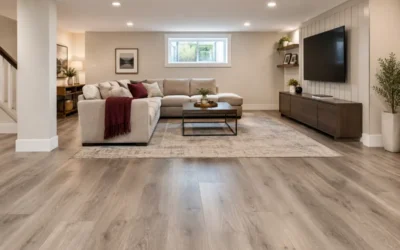
Quick answer: Solid vs engineered hardwood comes down to moisture, location and how long you plan to stay. Solid hardwood is one thick piece of wood that can be sanded and refinished many times, but it reacts more to humidity. Engineered hardwood has a plywood core with a real wood top layer, so it is more stable and can go in basements and over concrete. Both are real wood, and both can be a good choice.
Choosing between solid vs engineered hardwood is one of the first decisions in a flooring project, and it affects cost, comfort and how the floor performs for decades. Homes in Connecticut and New York see big seasonal swings in humidity, which makes the choice more important than it might be in a steadier climate. This guide compares the two side by side so you can walk into your estimates knowing what matters.
Table of Contents
What is the difference between solid and engineered hardwood?
Solid hardwood is milled from a single piece of wood, usually about three-quarters of an inch thick. It is nailed or stapled to a wood subfloor and can be sanded down and refinished several times over its life.
Engineered hardwood is built in layers. A real hardwood veneer, called the wear layer, sits on top of a core of plywood or high-density fiberboard. The layers run in different directions, which helps the plank resist expanding and shrinking with humidity.
From the top, the two look almost identical. The differences show up in how they behave, where they can be installed and how many times they can be refinished.
Solid vs engineered hardwood: 7 factors to weigh
1. Moisture and humidity
This is the biggest factor in a Northeast home when comparing solid vs engineered hardwood. Solid wood swells in humid summers and shrinks in dry winters, which can cause gaps or cupping. Engineered planks are more dimensionally stable, so they tend to handle seasonal swings with less movement.
2. Where it can be installed
Solid hardwood is best on or above grade over a wood subfloor. Engineered hardwood can often go over concrete slabs and in basements, either glued down or floated, as long as moisture is tested and controlled first.
3. Refinishing and lifespan
Solid hardwood can often be refinished many times, which is why some floors last generations. Engineered hardwood can be refinished too, but only as many times as its wear layer allows. Thicker wear layers give you more options.
4. Cost
Prices in the solid vs engineered hardwood comparison overlap, because both come in a wide range of species and grades. In general, the material cost depends more on species and quality than on construction type. Installation cost depends on the subfloor and method, so compare complete written quotes, not just the price per square foot.
5. Installation method
Solid planks are typically nailed down. Engineered planks may be nailed, glued or floated, which gives more flexibility. A professional flooring installation team will choose the method that fits your subfloor and moisture conditions.
6. Radiant heat and subfloor conditions
If you have radiant heating, engineered hardwood is usually the safer choice, because its layered build handles temperature changes better. Always follow the manufacturer’s guidance for the specific product and the heating system.
7. Look, feel and sound
In a solid vs engineered hardwood side-by-side, a good engineered floor looks and feels like solid wood from the surface. Very wide planks and certain finishes are more commonly available in engineered form, because the layers keep wide boards flatter.
Solid vs engineered hardwood at a glance
| Factor | Solid hardwood | Engineered hardwood |
|---|---|---|
| Construction | One piece of wood | Real wood top layer on a layered core |
| Humidity response | More movement | More stable |
| Basements and concrete | Generally not recommended | Often suitable with moisture control |
| Refinishing | Many times | Limited by wear layer thickness |
| Installation | Nail or staple to wood subfloor | Nail, glue or float |
| Best for | Main levels, long-term homes | Basements, slabs, humidity swings |
Which is better for a Connecticut or New York home?
For above-grade living spaces with a wood subfloor, solid vs engineered hardwood is close to a tie: both work well, and many homeowners choose solid hardwood for the long refinishing life. For basements, finished lower levels, concrete slabs or rooms with bigger humidity swings, engineered hardwood is usually the safer pick. In a home that moves between a humid summer and a dry, heated winter, engineered planks can reduce the gaps and cupping that homeowners notice with solid wood.
If you are comparing options for several rooms, it is common to use solid hardwood on the main level and engineered hardwood in the basement, matching the species and color so the look stays consistent.
How to choose solid vs engineered hardwood room by room
You do not have to pick one type for the whole house. Many homeowners use solid hardwood in living rooms, dining rooms and bedrooms above grade, where it can be refinished for decades. They use engineered hardwood in basements, over concrete, in sunrooms and in kitchens with a lot of sun and humidity change. Matching species, color and plank width keeps the transition between rooms seamless, and a professional installer can set transitions so the floor reads as one continuous surface.
Questions to ask before you choose
- What is the wear layer thickness, and how many times can this floor be refinished?
- What subfloor do I have, and does it need moisture testing or preparation?
- What installation method do you recommend, and why?
- How long should the wood acclimate in my home before installation?
- What does the quote include: removal of the old floor, subfloor prep, trim and transitions?
- What warranty comes with the product and the installation?
The National Wood Flooring Association publishes guidance for homeowners at nwfa.org, which is a useful independent reference when you compare solid vs engineered hardwood.
Care and maintenance for either floor
Whichever way the solid vs engineered hardwood decision goes, the care routine is similar. Sweep or vacuum with a soft attachment, wipe spills promptly and use felt pads under furniture. Keep indoor humidity in a steady range, which protects solid planks from gapping and engineered planks from edge movement. Use a cleaner recommended for your finish, and avoid wet mops or steam cleaners. Place mats at entrances to catch grit, and plan on periodic maintenance coats or a refinish when the finish begins to dull. Keeping a record of the product name, finish and installation date makes future repairs, matching boards and warranty claims far simpler for you and for any flooring professional you hire later.
Frequently asked questions
Is engineered hardwood real wood?
Yes. The top layer is real hardwood, and the core is made of layered wood or wood fiber. It is not the same as laminate, which uses a photographic image on top.
Which is more durable, solid vs engineered hardwood?
Both are durable. Solid wood can be refinished more times, while engineered wood is more stable in changing humidity. Durability in daily use depends mostly on the species, the finish and how the floor is maintained.
Does solid vs engineered hardwood matter for resale value?
Buyers generally value real wood floors either way. A well-installed, well-maintained floor of either type is an asset, so choose the one that suits the room and the subfloor.
Can engineered hardwood be refinished?
Often, yes, depending on the thickness of the wear layer. Thicker layers can usually be sanded and refinished at least once, and sometimes several times.
Can I put hardwood in a basement?
Engineered hardwood is often used in basements when moisture is tested and controlled first. Solid hardwood is generally not recommended below grade.
How long does hardwood flooring installation take?
It depends on the room sizes, the subfloor and the method. Many projects are completed in a few days, plus time for the wood to acclimate before installation.
Get hardwood flooring installation from DFS In-Home Services
If you are weighing solid vs engineered hardwood for your home, a professional assessment of your subfloor and moisture conditions is the best first step. DFS In-Home Services has served homeowners with roofing, siding, windows, seamless gutters, flooring and renovations since 2001. We are based in Carmel, NY, and work across Connecticut and the New York tri-state area, including Fairfield, Litchfield and New Haven counties in Connecticut and Putnam and Westchester counties in New York. 100% financing is available.
Call us at 1 (877) 337-2739 or request a free in-home estimate. You can also explore our flooring services, see our flooring installation in Connecticut, or browse the catalog. Planning exterior work too? Our guide to vinyl vs James Hardie siding can help.
Ready to Start Your Project?
Get a FREE, no obligation In-Home Service consultation.
Request Estimate
Talk to one of our products specialist about your project.