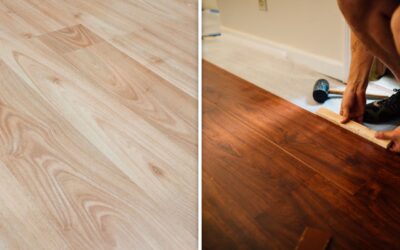
Quick answer: The best basement flooring for most Connecticut and New York homes is luxury vinyl plank (LVP), the safest all-round choice. Porcelain tile is best where water is a real risk, and engineered wood only makes sense in a basement that tests dry. Solid hardwood does not belong below grade. Whatever you pick, test the slab for moisture first.
Table of Contents
A finished basement is one of the best ways to add living space, but the basement flooring you choose decides whether the project lasts. Below-grade rooms are cooler, damper and less forgiving than the rest of your house. Homeowners across Connecticut, Westchester and upstate New York deal with freeze-thaw cycles, heavy spring snowmelt, older foundations and sump pumps that work hard every March. The flooring that looks perfect in a showroom can fail within a couple of seasons if it does not suit those conditions.
This basement flooring guide compares the three options we are asked about most, LVP, engineered wood and tile, and explains how to choose, how to prepare, and what to ask before you hire an installer.
Why basement flooring is different in Connecticut and New York
Concrete slabs are porous. Even a basement that never floods can send moisture vapor up through the floor, especially after snowmelt and in humid summers. Four things make basement flooring a different decision from an upstairs floor:
- Moisture vapor: water moves up through the slab all year, not just during storms.
- Cold slabs: concrete stays cool, so some floors feel colder underfoot than others.
- Temperature swings: basements in older Northeast homes can run cold in winter and damp in summer.
- Uneven floors: older slabs are rarely perfectly flat, which affects which products will install well.
Test for moisture before you choose any floor
This is the single most important step, and it is the one most often skipped. A simple home check can tell you a lot:
- Tape a 2 foot by 2 foot sheet of clear plastic tightly to the bare slab on all four sides.
- Leave it for 24 to 72 hours.
- If you see condensation under the plastic or the concrete looks darker, moisture is coming through.
A professional moisture test is more accurate and is worth doing before a large project. If the slab is wet, fix the source first, with grading, gutters and downspouts that carry water away from the house, a working sump pump, or a waterproofing specialist where needed. No flooring will perform well over a basement that takes on water. For more on controlling moisture at home, see the EPA guidance on moisture and mold.
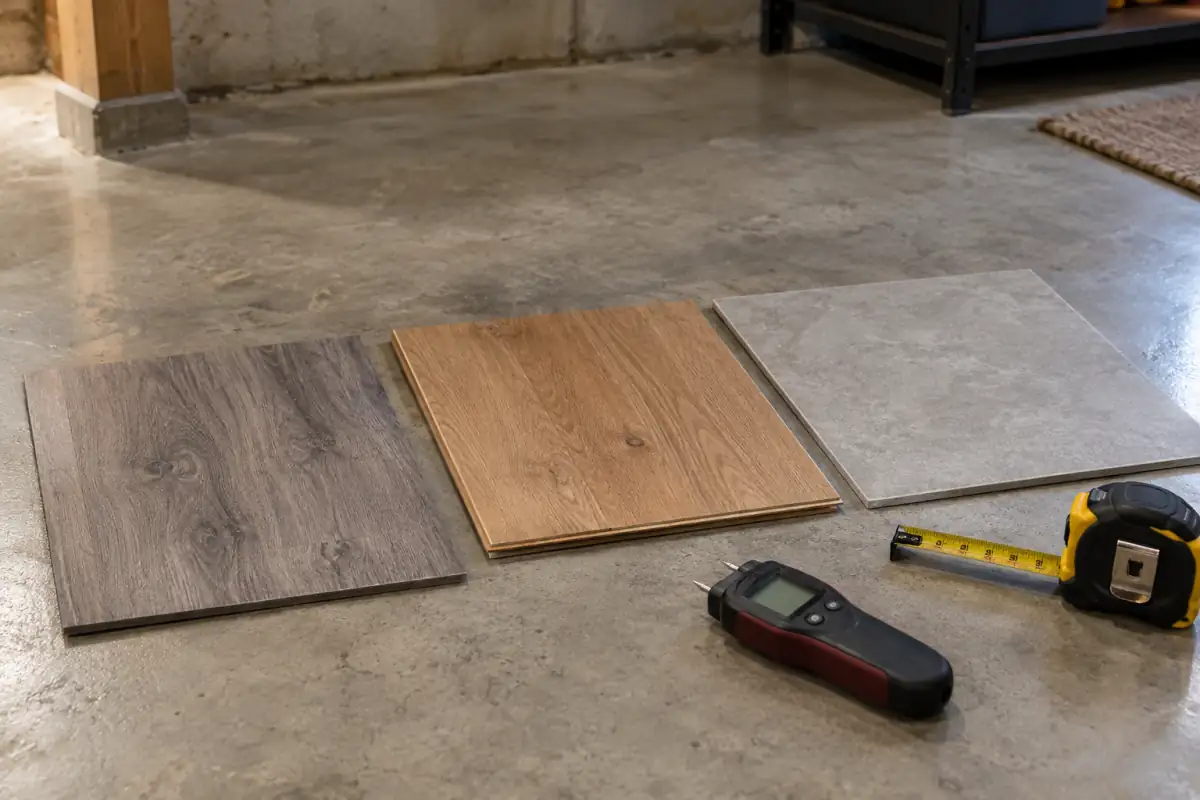
LVP vs engineered wood vs tile at a glance
| Feature | Luxury vinyl plank | Engineered wood | Porcelain tile |
|---|---|---|---|
| Water resistance | Excellent | Limited | Excellent |
| Feel underfoot | Softer, warmer | Warm, natural | Hard and cold |
| Look | Wood or stone look | Real wood surface | Wood, stone or concrete look |
| Handles an uneven slab | Fairly well (floating) | Needs a flat floor | Needs a flat floor |
| Rough installed cost* | $$ | $$$ | $$$ |
| Best for | Most family rooms and play areas | Dry, well-sealed basements | Bars, laundry, gyms, flood-prone rooms |
*Cost symbols are relative. See the cost section below for rough ranges.
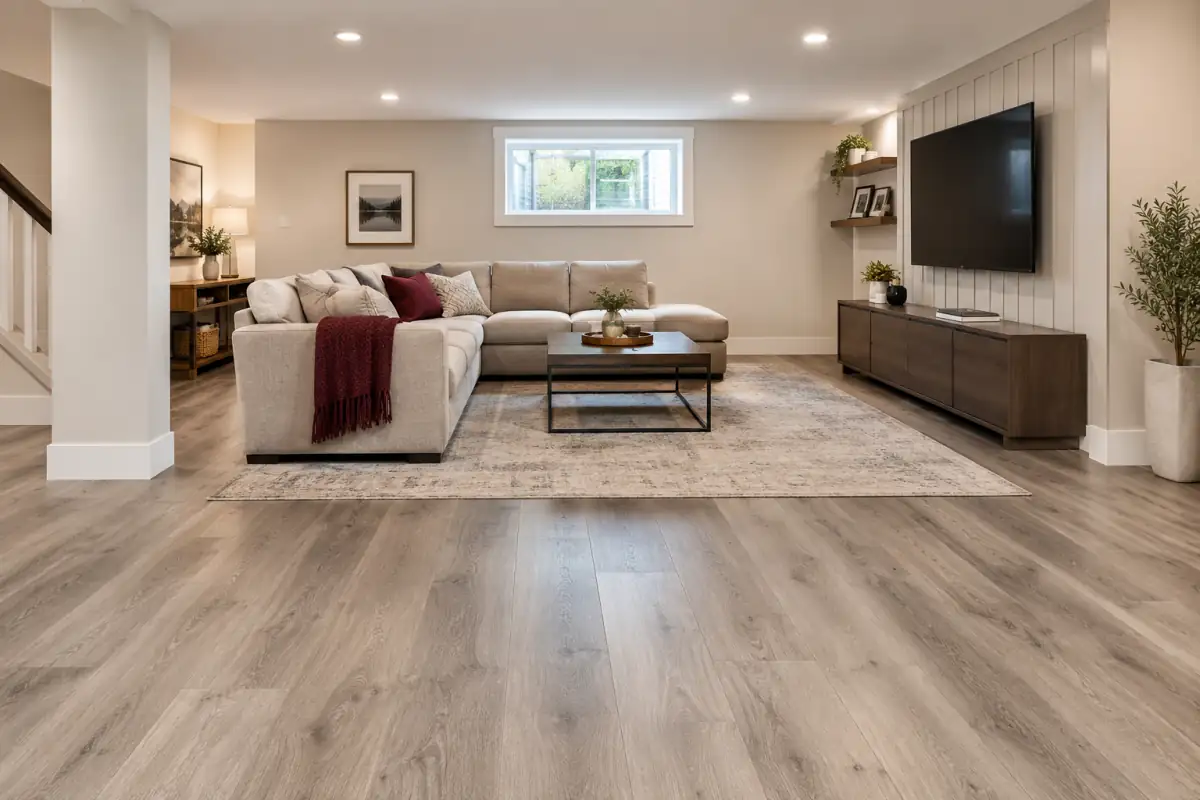
Luxury vinyl plank (LVP): the best default for most basements
LVP is made of layered vinyl with a printed wood or stone surface. It is the floor we recommend most often for finished basements because it tolerates moisture far better than wood and installs as a floating floor, so it bridges small slab imperfections.
Pros
- Waterproof or highly water-resistant, depending on the product
- Comfortable and quieter underfoot than tile
- Realistic wood and stone looks
- Often the most budget-friendly of the three
- Planks can be replaced individually if damaged
Cons
- Can dent under heavy furniture if the product is thin
- Lower-quality products can look flat or repetitive
- It is not a substitute for fixing real water problems
Engineered wood: beautiful, but only in a dry basement
Engineered wood has a real hardwood surface over a plywood or fiberboard core. That construction is more stable than solid wood, so it can be used below grade, but it is still sensitive to moisture. It suits a basement that has tested dry, has good humidity control and a proper moisture barrier.
Pros
- Real wood look and feel
- More stable than solid hardwood
- Adds a warm, upstairs-quality feel to a finished basement
Cons
- Can swell, cup or delaminate if the slab is damp
- Needs a flat subfloor and careful acclimation
- Higher cost, and warranties often exclude moisture damage below grade
Want to compare it with solid wood before you decide? Read our guide to solid vs engineered hardwood.
Porcelain tile: the toughest option where water is a real risk
Porcelain tile is dense, nearly waterproof and extremely durable. It is a smart basement flooring choice for a basement bar, laundry room, gym or any space near a sump pump or utility area. Its weakness is comfort: it is hard and cold, which matters in a Northeast winter.
Pros
- Highly water-resistant and long lasting
- Easy to clean and stands up to heavy use
- Works with in-floor radiant heating
Cons
- Feels cold unless you add radiant heat mats or area rugs
- Hard underfoot, so dropped items break and legs tire
- Needs a very flat slab, and grout lines need sealing
Other options worth a quick look
- Sheet vinyl: an affordable, waterproof choice for laundry and utility areas.
- Carpet tiles: warm and easy to swap out if one tile is damaged, good for play rooms.
- Sealed or epoxy-coated concrete: a low-cost, modern look for workshops and storage.
- Solid hardwood: we do not recommend it below grade because it moves with humidity and can fail quickly. For hardwood floors upstairs, hardwood floor refinishing is a better way to refresh worn wood.
Which basement flooring should you choose?
- Family room or play area: LVP for comfort, durability and water resistance.
- Home bar, laundry or gym: porcelain tile, or LVP with a rubber gym surface on top.
- Basement with any history of seepage or flooding: tile or LVP, never wood.
- Dry, well-sealed basement where you want a wood look: engineered wood over a vapor barrier.
- Cold basement you want to feel cozy: LVP with a quality underlayment, or tile with radiant heat.
Prep matters more than the product
The best flooring installation starts with the slab. Most basement flooring failures come from skipped prep, not bad products, so basement flooring installation should always start with the slab. A good installation usually includes:
- A moisture test, and a vapor barrier or moisture-rated underlayment where needed
- Grinding or filling to level the slab within the manufacturer’s tolerance
- Acclimating the flooring in the room before installation
- Leaving the correct expansion gap at walls
- Planning baseboards and doors so the new floor height still clears them
How much does basement flooring installation cost?
Flooring installation cost varies by product, room size and slab condition, so treat these as rough installed ranges before prep and repairs. Hardwood flooring installation cost is usually higher than LVP, which is one more reason engineered wood and tile suit different budgets:
- LVP: roughly $5 to $11 per square foot
- Engineered wood: roughly $8 to $16 per square foot
- Porcelain tile: roughly $10 to $22 per square foot
Leveling, moisture barriers and removing old flooring add to these numbers. The only reliable price is a written quote after someone has seen your slab, so ask flooring installers for one that itemizes prep work separately.
Questions to ask flooring installation contractors for your basement
- Will you test the slab for moisture, and what happens if it fails?
- What vapor barrier or underlayment will you use?
- How will you level the slab, and is that included in the quote?
- Which product do you recommend for my basement, and why?
- What does the warranty cover below grade?
- How long will the job take, and who will be in my home?
Frequently asked questions
Is LVP really waterproof in a basement?
Most LVP is waterproof or highly water-resistant on the surface, but water that sits under the floor can still cause mold and odor. Use it over a dry or well-managed slab, and fix standing water first.
Can I put engineered hardwood in a Connecticut or New York basement?
Sometimes. It works in a basement that tests dry, has humidity control and a moisture barrier. If you have any history of seepage, choose LVP or tile instead.
What is the warmest basement floor?
LVP with a good underlayment and engineered wood feel warmer than bare tile. Tile can be very comfortable with radiant heat or area rugs.
How long does basement flooring installation take?
Many basements take a few days once the slab is prepared. Leveling, moisture work and tile curing can add time.
Ready to plan your basement floor?
DFS In-Home Services is a flooring installation company that installs flooring and finishes basements across Connecticut and New York. We start with a free in-home consultation, look at your slab and explain your options clearly. Learn more about our basement remodeling services and flooring installation, or call 1 (877) DFS-CREW or request a Free Estimate.
Ready to Start Your Project?
Get a FREE, no obligation In-Home Service consultation.
Request Estimate
Talk to one of our products specialist about your project.