Quick answer: Choosing between roof repair or replacement comes down to age, how widespread the damage is and whether water has already reached the deck or attic. A newer roof with a few lifted shingles or one flashing leak is usually a repair. An older roof with curling, widespread granule loss or repeated leaks is usually a replacement. A written inspection from a local roofer will settle it.
Every spring, homeowners across Fairfield, Litchfield and New Haven counties in Connecticut, and from Putnam and Westchester to Long Island and upstate New York, walk outside after the thaw and wonder what the winter did to their roof. Freezing temperatures, ice, wind and heavy snow all take a toll. The big question is whether you are looking at a simple fix or a full project. This guide explains how to judge roof repair or replacement for your own home, so you can talk to a contractor with confidence instead of guessing.
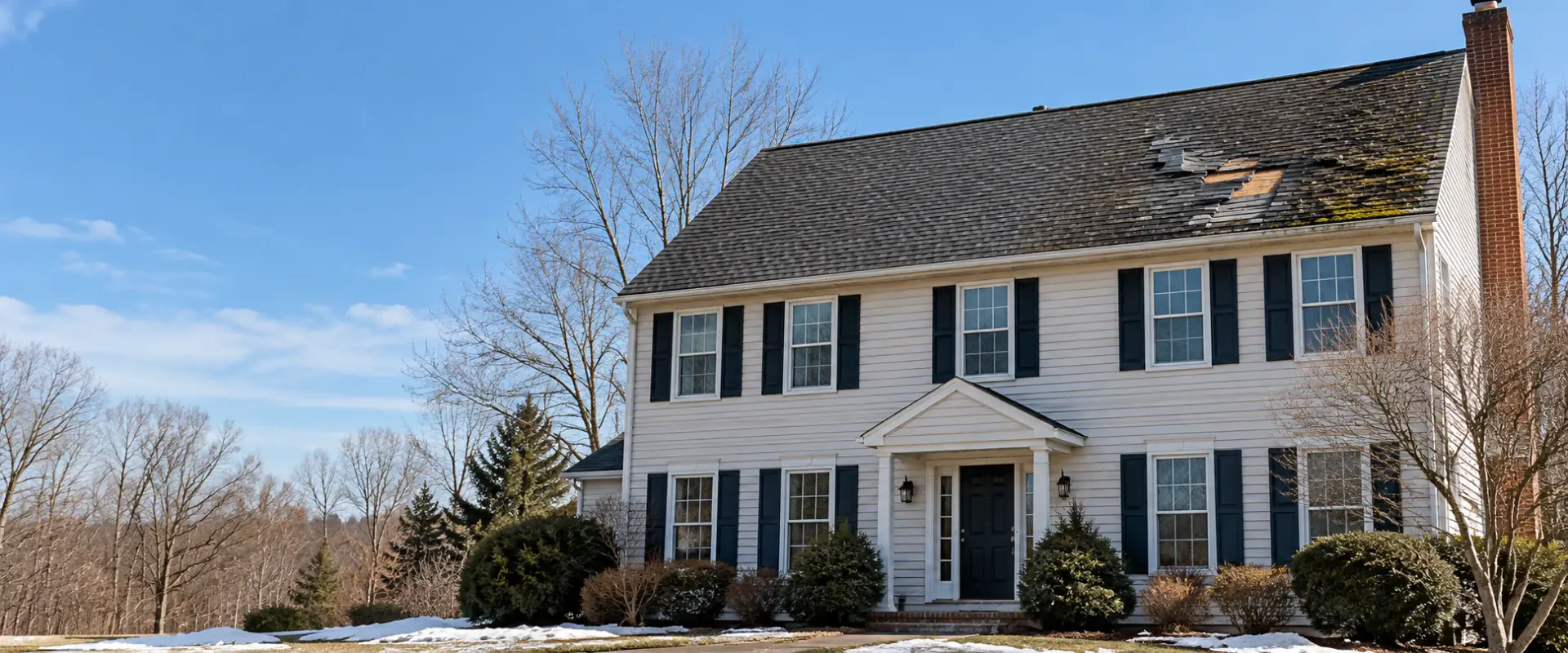
Table of Contents
Why Northeast winters are so hard on roofs
A roof in the Northeast does more than shed rain. It goes through repeated freeze and thaw cycles, ice dams along the eaves, strong nor’easter winds and the weight of wet snow. Water that gets under a shingle, freezes and expands can lift it a little more each time. Over a few seasons, small problems turn into leaks.
That is why a post-winter check matters. Catching a small problem in April is far cheaper than finding a ceiling stain in July. A seasonal check keeps roof repair or replacement costs predictable, and it helps you decide before the damage spreads to insulation, sheathing and drywall.
7 signs to check after winter
You can do the first look safely from the ground. Walk around the house with binoculars, and then check the attic. Please do not climb onto a cold or wet roof yourself. These seven checks will help you make the roof repair or replacement call with real evidence.
1. Missing, cracked or lifted shingles
Shingles that blew off or are curled at the edges leave the underlayment exposed. A few missing shingles on a newer roof usually point to a repair.
2. Granules in the gutters
Asphalt shingles are coated with mineral granules that protect them from the sun. A lot of grit in your gutters or at the downspouts suggests the shingles are wearing out.
3. Water stains in the attic or on ceilings
Brown rings on a ceiling, damp insulation or daylight showing through the roof boards in the attic are clear signs of a leak. Note where they are, because the leak source is often higher up the slope than the stain. Our guide to what a roof inspection checks shows where a roofer will look first.
4. Damaged flashing
Metal flashing seals the joints around chimneys, vents and skylights. Ice and movement can pull it loose. In a roof repair or replacement decision, flashing problems are among the most common causes of winter leaks, and they are often a repair, not a full replacement.
5. Sagging or soft areas
A dip in the roofline or a spongy feel suggests the decking underneath may be wet or weakened. This is a serious sign, and it points toward replacement of at least that section.
6. Ice dam damage at the eaves
Ice dams happen when melted snow refreezes at the roof edge and backs water up under the shingles. Ice dams can push the roof repair or replacement question forward, so look for stained soffits, peeling paint near the eaves or bent gutters.
7. Moss, algae and rot
Damp, shaded slopes grow moss and algae that hold moisture against the roof. Rot at the roof edge or fascia means water has been getting in for a while.
When roof repair is usually enough
In the roof repair or replacement decision, a repair makes sense when the problem is limited and the rest of the roof is sound. In practice, that often looks like this:
- The roof is relatively young, often under about 15 years old for asphalt shingles.
- Damage is confined to a small area, such as a few shingles or one flashing detail.
- The leak has been traced to a single, fixable source.
- The decking is dry and solid, with no signs of rot.
Good roof repair services should also look for the cause, not just patch the symptom. A patch over a leak that keeps coming back only delays the bigger bill.
When replacement makes more sense
The roof repair or replacement decision tips toward replacement when the roof is near the end of its life or the damage is spread out. Common signals include:
- The roof is old. Many asphalt shingle roofs last roughly 20 to 30 years, depending on the product, ventilation and weather exposure.
- Shingles are curling, cracking or losing granules across large areas.
- You have had several leaks or repairs in recent years.
- Water has damaged the decking, insulation or ceilings.
- A repair would cost a large share of a new roof, so the money is better spent on a lasting solution.
A rule of thumb some roofers use is that when roughly a third of the roof needs work, replacement starts to look like the smarter option. It is only a guideline, but it helps frame the conversation. Use the table below as a starting point for your own roof repair or replacement decision.
Roof repair or replacement at a glance
| Factor | Repair | Replacement |
|---|---|---|
| Roof age | Younger, still in good condition | Near or past typical lifespan |
| Damage | Limited and localized | Widespread or recurring |
| Leaks | One identifiable source | Multiple or repeated leaks |
| Decking | Dry and solid | Soft, wet or rotted |
| Up-front cost | Lower | Higher, but a fresh warranty |
| Long-term value | Buys time | Resets the roof’s lifespan |
What to ask before you decide on roof repair or replacement
Whichever way you lean on roof repair or replacement, get the facts in writing before work starts. Ask any roofing contractor near you the following:
- Can you give me a written inspection report, with photos of what you found?
- What caused the problem, and how will you fix the cause?
- If you recommend replacement, why is repair not enough?
- What are the material and workmanship warranties, and what do they cover?
- Are you licensed and insured, and who will actually be on my roof?
- Does the quote include tear-off, disposal, flashing and ventilation?
Timing matters too. Roofers are busiest in late spring and early fall, so booking an inspection early gives you time to compare written estimates, check references and schedule the work before the next round of storms. If you spot an active leak, cover and contain it, document it with photos and call a roofer promptly rather than waiting for the next scheduled visit.
The National Roofing Contractors Association also publishes homeowner guidance at nrca.net if you want an independent reference on what a quality roofing job includes.
What a Roof Replacement Involves
If the answer is a new roof, it helps to know what good work looks like. A proper roof replacement usually starts with tearing off the old shingles down to the wood deck, rather than adding a second layer on top. That lets the crew see the deck and replace any soft or rotted boards.
Next comes ice and water shield along the eaves and valleys, which matters in places that see ice dams, from Litchfield County to Lake Carmel. Synthetic underlayment covers the rest of the deck, then new flashing goes in around chimneys, vents and walls. Ridge and soffit ventilation should be checked so the attic can breathe, and only then are the new shingles installed.
A careful crew finishes with a magnetic sweep for nails, gutter cleanout and a final walkthrough. Ask for photos of the deck and any repairs before the new roof covers them up.
Roof Repair or Replacement in Your Town
The right call often depends on local conditions. Homes along the shoreline in Westport and Stamford face salt air and strong coastal winds. Older homes in Danbury, Carmel and Mahopac often have several layers of roofing or original decking. Houses in Yonkers and White Plains may have low-slope sections that need different materials. A local roofer who knows these patterns can tell you quickly whether roof repair or replacement makes more sense.
Frequently asked questions
1. How do I know if I need roof repair or replacement?
Look at the roof’s age, how much of it is damaged and whether water has reached the decking or attic. Limited damage on a younger roof is usually a repair. Widespread wear on an older roof is usually a replacement. An inspection gives you a definite answer.
2. Is roof repair or replacement cheaper in the long run?
Repair costs less today, but a roof that is near the end of its life can keep generating repair bills. When the roof is old or the damage is widespread, replacement is often the better long-term value.
3. How long does a roof last in Connecticut?
It varies with the material and care, but many asphalt shingle roofs last about 20 to 30 years. Ventilation, ice dam control and regular maintenance can add years, while harsh exposure can shorten it.
4. Can I repair a roof in winter?
Emergency repairs to stop a leak can be done in cold weather, but some products need warmer temperatures to seal properly. A temporary fix now and a permanent repair in spring is a common approach.
5. Does homeowners insurance cover winter roof damage?
Often it covers sudden storm damage, but not wear and tear. Photograph the damage, keep records and read your policy, then ask your insurer what is covered. Our guide to filing a roof damage insurance claim walks through the steps.
Get a roofing inspection from DFS In-Home Services
If you are weighing roof repair or replacement, an honest inspection is the best next step. DFS In-Home Services has served homeowners with roofing, siding, windows, seamless gutters and renovations since 2001. We are based in Carmel, NY, and work across Connecticut and the New York tri-state area, including Fairfield, Litchfield and New Haven counties in Connecticut and Putnam and Westchester counties in New York. 100% financing is available.
Our team can walk you through roof repair or replacement for your specific roof. Call us at 1 (877) 337-2739 or request a free in-home estimate. You can also explore our roofing services, see how we work in Connecticut, or read why homeowners choose us as a roofing contractor in Connecticut. Planning exterior work? Our guide to what a good roof inspection checks can help you plan the next project.
Ready to Start Your Project?
Get a FREE, no obligation In-Home Service consultation.
Request Estimate
Talk to one of our products specialist about your project.